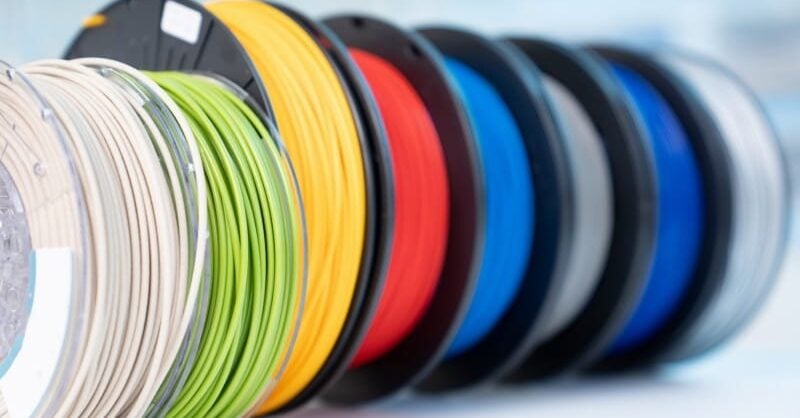
In 3D printing, material choice has a direct impact on both print quality and the long-term performance of finished parts. While many filaments offer either ease of use or strong mechanical properties, achieving a balance between the two can be challenging. PETG-based materials have become popular because they bridge this gap effectively, especially in applications that require both reliability and durability.
Among these materials, PETG-Basic is designed to simplify printing while maintaining strong structural performance. It is widely used in functional prototyping and everyday printing tasks where consistency matters more than complex tuning. A commonly referenced option in this category is PETG-basic, which is engineered to provide stable extrusion behavior and improved user experience across a variety of FDM printers.
Table of Contents
ToggleStable Extrusion for Better Print Quality
One of the main ways PETG-Basic improves print quality is through its stable extrusion characteristics. Consistent material flow is essential for producing clean layers, smooth surfaces, and accurate dimensional results.
Key advantages of stable extrusion:
- More uniform layer deposition
- Reduced risk of under-extrusion
- Smoother surface finish
- Improved dimensional accuracy
Because PETG-Basic is optimized for predictable flow, it reduces common printing inconsistencies that can affect visual and structural quality.
Strong Layer Adhesion for Durability
Layer adhesion is one of the most important factors in determining the strength of a 3D printed object. Poor adhesion can lead to weak parts that break under stress, even if they look visually correct.
PETG-Basic improves durability by forming strong bonds between layers during printing.
Benefits of strong layer adhesion:
- Increased impact resistance
- Reduced risk of delamination
- Better structural integrity under load
- Longer-lasting functional parts
This makes PETG-Basic suitable for mechanical components, enclosures, and functional prototypes that require reliable strength.
Reduced Warping for More Accurate Prints
Warping is a common issue in many thermoplastics, especially during cooling. It can cause corners to lift from the build plate or lead to dimensional inaccuracies.
PETG-Basic minimizes this problem due to its balanced thermal properties.
Warping reduction benefits:
- Improved first-layer stability
- Better bed adhesion performance
- More accurate final dimensions
- Reduced print failures on larger parts
This stability helps users achieve consistent results even on larger or more complex models.
Improved Surface Finish
Surface quality is an important factor for both functional and aesthetic prints. PETG-Basic produces a smooth, slightly glossy finish that enhances the overall appearance of printed objects.
Surface quality improvements include:
- Cleaner layer transitions
- Reduced visible layer lines
- More professional-looking parts
- Better suitability for end-use products
This makes it a strong option for prototypes and consumer-facing components where appearance matters.
Balanced Flexibility and Strength
Another way PETG-Basic enhances performance is through its balanced mechanical properties. It is neither too rigid nor too flexible, which helps reduce cracking under stress while maintaining structural integrity.
Mechanical advantages:
- Moderate flexibility prevents brittle failure
- Strong enough for functional use
- Resistant to everyday mechanical stress
- Suitable for a wide range of applications
This balance makes it more versatile than many rigid or overly flexible materials.
Easier Printing Experience for Consistent Results
Print quality is not only about material strength but also about how easy it is to achieve successful prints. PETG-Basic is designed to reduce complexity in the printing process.
Ease-of-use benefits:
- Less sensitivity to minor setting variations
- Stable performance across different printers
- Lower risk of printing errors
- Reduced need for advanced calibration
This allows users to focus more on design and functionality rather than constant printer adjustments.
Moisture Resistance for Long-Term Reliability
Like many PETG-based materials, PETG-Basic offers good resistance to moisture absorption compared to some other filaments. This helps maintain consistent print quality over time.
Moisture-related benefits:
- Reduced print defects caused by humidity
- More stable extrusion performance
- Longer shelf life when properly stored
- Improved reliability in varying environments
Proper storage still plays an important role, but PETG-Basic is generally more forgiving than highly hygroscopic materials like Nylon.
Conclusion
PETG-Basic improves both print quality and durability by combining stable extrusion, strong layer adhesion, and balanced mechanical properties. Its reduced warping, smooth surface finish, and ease of use make it a reliable material for a wide range of 3D printing applications.
By offering consistent performance without requiring complex tuning, PETG-Basic helps users achieve high-quality results more efficiently. This makes it a practical choice for functional parts, prototypes, and everyday printing tasks where both durability and print reliability are important.